
Greg Paranich
Ag Field Specialist
GWFA
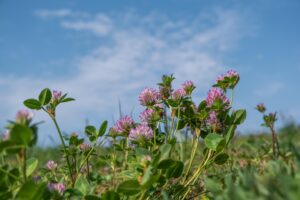 Every year about this time I get calls with concerns about the effects of horses grazing alsike clover, and their horses getting “alsike clover poisoning”. I am not a veterinarian, nor a horse specialist. I am, however, a lifelong horse owner and been in the grazing and forage business a long time. I am told that to borrow information from one person is plagiarism, but from several is research! I will share with you what I have learned along the way and from others.
Alsike clover is found in most areas in Alberta that have been farmed. It was introduced as one of the earliest forages available in our grandfathers’ time. With its hard seed coat, it can remain dormant in the soil “seed bank” for very long periods of time, until enough moisture is available to penetrate the seed to stimulate germination. That is why, even though we did not plant any alsike in our forage and pasture fields, we still see it crop up in places especially low areas where water will pond, even temporarily. That is why, in horse pastures or “horse hay” fields we should always be on the lookout for it.
Alsike clover poisoning is caused by a “pyrrolizidine alkaloid” that results in liver damage. You might think of it as being similar to sorosis of the liver in humans. The symptoms we see in horses are due to this liver damage. Like many other situations, different individual horses may have varying levels of reaction and symptoms to the poisoning. Depending on how much is eaten and for how long, symptoms can vary from mild, to severe or even death. Most commonly we see sunburned skin and photosensitization resulting in blistering and skin peeling/hair loss on white faces, noses and body areas (like on Paint horses). In most cases topical creams (available from your Vet) can be applied. In more severe cases animals will need to be withdrawn and isolated into dark area to avoid serious photosensitivity until their symptoms recover. Other areas of the body may get scabs and sores especially on the heels. These can often be misdiagnosed as “scratches” but may often be from alsike clover poisoning. Again, some horse’s symptoms and reactions may vary from being one of discomfort ranging to severe brain swelling, or encephalitis. All of this emerges from the degree of liver damage an individual horse has experienced. Another symptom that may occur from the liver damage, is unexpected weight loss. The damaged liver cannot convert the feed into sugars that are required by the body. The liver has a unique ability to recover from alsike poisoning, if it has not been damaged severely. If you suspect your horse has been affected by alsike poisoning, remove them from the pasture, and the alsike clover, to a sun sheltered area. Feed them grass hay. Hay with legumes (alfalfa or clovers) have high protein and cause more work for the damaged liver to process. Keep in mind that this can affect any and all breeds or colors of horses. And call your Vet!
We can avoid the problem if we ensure that we have pastures free of alsike clover targeting 5% or less . To start with, do not include it in any pasture or hayfield seed mixtures. Yes, alsike clover in hay can still cause the liver problems in your horse just as much as grazing. Next is to identify alsike clover presence in your fields. They can be controlled on a number of management fronts. Manage the grazing in your pastures to promote tall grasses. Alsike clover is less tolerant of shade and will not thrive well in competition with grasses providing a shade canopy such as tall fescue, bromegrass, and orchard grass. Grazing down to the ground, as is the case with too many “horse pastures”, helps promote alsike clover as a more dominant forage. Using a rotational grazing plan for your horse pasture with help to keep the grasses taller and competitive, and more productive. Alsike clover also likes wet to water logged areas, that will suppress many grasses and will therefore persist in those low areas. Establish water tolerant grasses in those spots to create competition and monitor them for any occurrences. You may consider a fertilizer program to get your horse pasture back to being competitive, as a starting point. There are also some very effective Range and Pasture herbicide products on the market that deliver very good control as well as grazing tolerance and safety. Proper and timely use of these products has given very good extended control of alsike clover, as well as numerous other undesirable pasture plants. Consult with your agriculture input supplier or your local Agricultural Service Board for the access to these products, as well as available application equipment.
As we can see, management of alsike clover involves an integrated approach using several management tools and practices to keep a horse pasture safe and productive. It also requires this effort year over year, not just a single knock out punch. Take the time to check you pastures, be aware of the hay content you are feeding (and paying for!) and watch your horses’ condition.
As a fellow horse enthusiast, I wish us all to enjoy our summer, our horses, and the trails we ride!